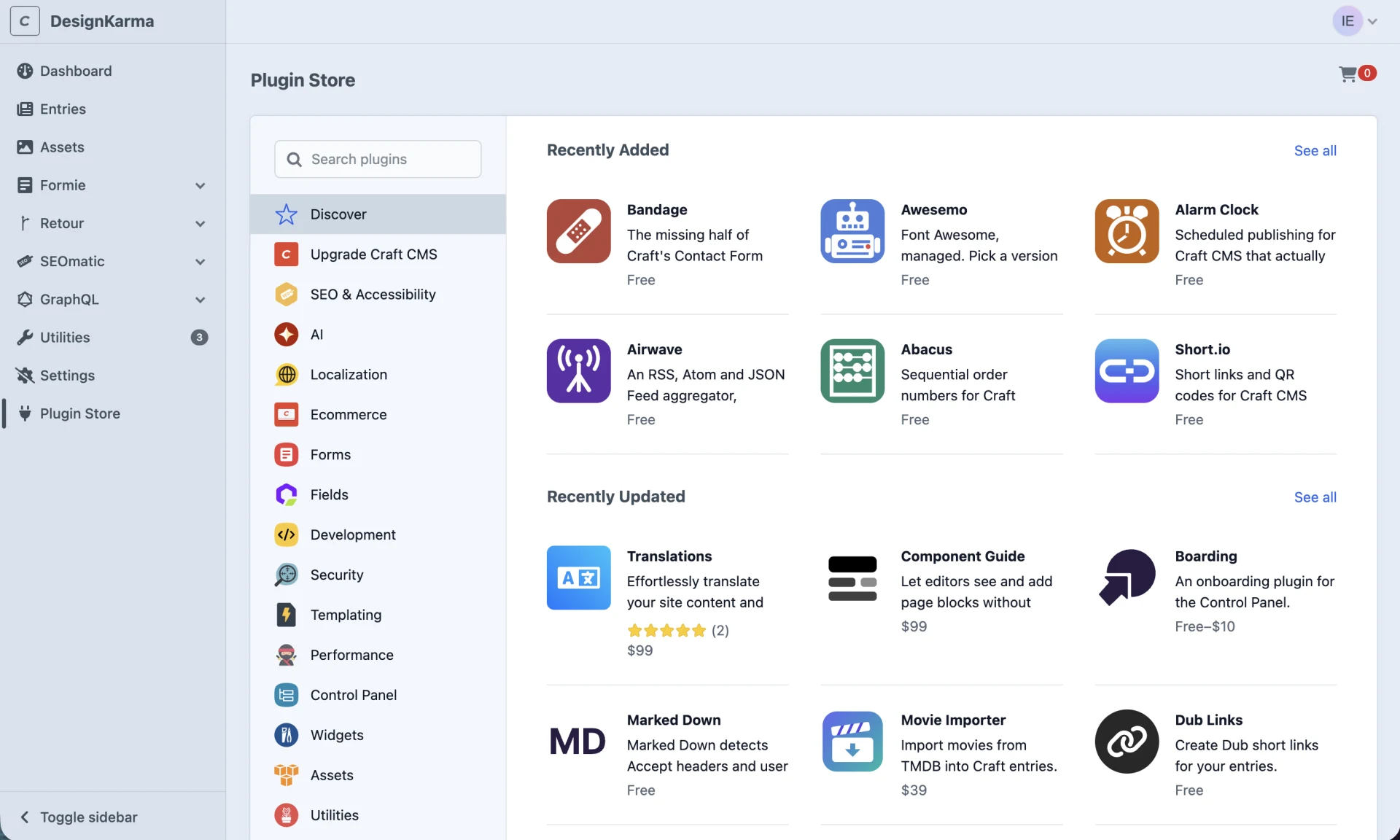
Essential Craft Plugins in 2026
by Ian Ebden in Craft CMS.
I first wrote about my essential Craft CMS plugins back in 2019. Seven years and several major Craft releases later, the plugin landscape looks rather different — although my approach to using them really hasn't changed.
One of the things I've always liked about Craft CMS is that you don't need dozens of plugins to build a capable website. Craft provides an excellent set of native features, and wherever possible I'll use those rather than introduce another third-party dependency. Every plugin added to a website is another piece of software that needs updating, maintaining and potentially replacing in future.
So I prefer to keep my Craft installations lean and mean.
That said, there are a handful of plugins that have proved themselves useful enough to earn a regular place in the Craft CMS websites I design, build and maintain. Here are my current favourites.
1. SEOmatic
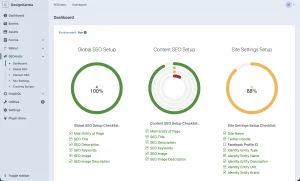
If there's one plugin that finds its way onto almost every Craft website I build, it's SEOmatic.
Developed by nystudio107, SEOmatic provides an extremely comprehensive set of tools for managing a website's technical and on-page SEO. It handles page titles and descriptions, canonical URLs, XML sitemaps, Open Graph and social metadata, structured data and Schema.org markup, robots directives and considerably more.
From a developer's perspective, one of its strengths is the ability to establish sensible SEO defaults across an entire website while still giving content editors control where they need it.
That means a client doesn't have to understand the technicalities of SEO to get the fundamentals right — but an SEO specialist can still take much finer control when required.
I've used SEOmatic for years and it's one of those rare plugins I now consider almost part of Craft itself.
2. Formie
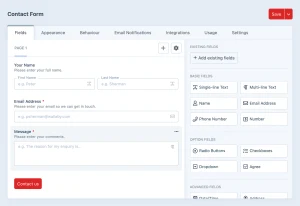
For anything beyond the simplest website form, Formie has become my preferred solution.
It's a comprehensive form builder that allows forms to be created and managed within the Craft Control Panel, supporting everything from straightforward enquiry forms to more sophisticated multi-page and conditional forms.
It also provides submission management, email notifications, spam protection and integrations with a wide range of third-party services.
For clients, that means they're not dependent on a developer every time a form needs changing. For me, it provides a consistent and flexible way to build forms without reinventing the wheel on every project.
It's interesting to compare this with my original 2019 article, when I generally recommended Craft's Contact Form and Google reCAPTCHA plugins. Formie is a good example of how much the Craft plugin ecosystem has matured since then.
3. Retour
URLs change. Pages get removed. Websites get restructured. When that happens, Retour helps make sure visitors — and search engines — end up in the right place.
Also developed by nystudio107, Retour provides redirect management and 404 monitoring directly within Craft. It's particularly useful during website rebuilds and migrations, where preserving existing URLs and carefully redirecting anything that changes can be critical to maintaining search visibility.
Retour can also monitor incoming 404 errors, helping identify broken links or old URLs that are still receiving traffic.
It's not the most glamorous part of building a website, but good redirect management can make an enormous difference during a migration — particularly on an established site with years of indexed content.
4. CKEditor
Craft's official CKEditor plugin has become my standard choice for rich-text editing.
Long-time Craft users may remember Redactor, which featured in my original plugin recommendations. CKEditor is now the first-party rich-text solution for modern Craft installations and integrates closely with Craft's content architecture.
One thing I particularly like is being able to configure the editor appropriately for each project. Rather than presenting clients with dozens of formatting controls they don't need, I can provide a deliberately limited set of headings, links and formatting options that match the website's design system.
The result is a cleaner editing experience and much less opportunity for inconsistent content formatting to creep into the site over time.
Those four plugins probably come closest to my definition of essential. The remaining plugins aren't something I'd automatically install on every website. Instead, they're tools I reach for when a particular project calls for them.
5. Feed Me — for Content Migration and Imports
Feed Me is an incredibly useful plugin when you need to get structured content into Craft.
It can import data from formats including XML, JSON and CSV and map that data to Craft's fields and content structure.
I've found this particularly valuable when migrating websites from other platforms or when taking a fresh-build approach to a major Craft CMS upgrade. Rather than manually recreating hundreds or thousands of entries, Feed Me can provide a repeatable migration process that imports content into a carefully prepared new Craft installation.
It's not something most websites need once they're up and running, so I wouldn't install it simply for the sake of having it available. But when I need it, it's invaluable.
6. AsyncQueue — for Background Processing
This one is rather more technical.
Craft has a queue system for handling jobs such as image transforms, content propagation and other processes that don't necessarily need to happen during a normal page request.
AsyncQueue changes how those jobs are processed, allowing queued tasks to run asynchronously rather than relying on someone visiting the Control Panel or waiting for work to complete during a web request. On the right project, that can make the website feel noticeably more responsive and make background processing considerably more reliable.
Again, it's not something every Craft installation necessarily needs. But on websites performing substantial amounts of background work, it's a small addition that can make a significant difference.
7. Postmark — for Reliable Transactional Email
Finally, there's Postmark.
Strictly speaking, this recommendation is as much about the Postmark service as it is the Craft plugin that connects to it.
Websites send more email than you might initially realise: contact form notifications, order confirmations, password resets, account activation messages and other transactional emails. Relying on the web server itself to deliver those messages isn't always ideal.
Using a dedicated transactional email service such as Postmark provides much greater visibility and reliability. You can see whether an email was successfully delivered, investigate problems and keep website-generated email separate from normal business email.
The Craft Postmark adapter makes integrating the service straightforward, so it's increasingly something I recommend for websites where reliable email delivery matters.
What Happened to My 2019 Recommendations?
Looking back at my original article is actually an interesting reminder of how quickly web technology evolves.
My 2019 list included plugins such as Redactor, Typogrify, CP Field Inspect, Video Embedder, Contact Form and reCAPTCHA.
Some have since been superseded by newer solutions. Some are no longer necessary for the kinds of websites I build. And in other cases, Craft itself has evolved to provide functionality that previously required additional plugins.
That's precisely why I'm cautious about introducing dependencies unnecessarily.
A plugin that solves a problem brilliantly today still becomes part of the website's technical architecture. Ideally, you're making that decision with the expectation that the site will still need to be maintained and upgraded five or ten years from now.
Choosing Craft CMS Plugins for the Long Term
There are hundreds of Craft CMS plugins available, including many excellent ones I haven't mentioned here. But before installing any plugin, I generally ask a few questions.
Is it actively maintained? Does it support current versions of Craft and PHP? Is the developer established within the Craft community? Is it likely to make future Craft upgrades easier or harder? And perhaps most importantly: do we actually need it?
That last question matters.
One of the dangers of any extensible CMS is that plugins can become the default answer to every problem. Over time, a seemingly harmless collection of additions can become a web of dependencies that makes upgrades and maintenance considerably more complicated.
I'd much rather have a Craft website running seven carefully selected plugins than seventy installed simply because they were convenient at the time.
Lean, Mean and Maintainable
For me, that's still one of Craft CMS's greatest strengths.
You can build sophisticated, bespoke websites without starting with a huge collection of third-party extensions. Craft provides the foundation. Plugins should enhance that foundation where they add genuine value — not compensate for limitations in the CMS itself.
My own plugin list will undoubtedly look different again in another few years. But I suspect the underlying philosophy will remain exactly the same:
Use Craft's native functionality wherever possible, choose third-party plugins carefully, and keep dependencies to a minimum.
The result is generally a faster, cleaner and more maintainable website — and one that's considerably easier to keep healthy as Craft CMS itself continues to evolve.
At DesignKarma, I've been building and supporting Craft CMS websites since 2013. If you need help developing, upgrading or maintaining an existing Craft website, take a look at my Craft CMS services or get in touch to discuss your project.



Thanks for reading